Never Truly Locked: The Art of Returning to an Edit You Thought Was Finished
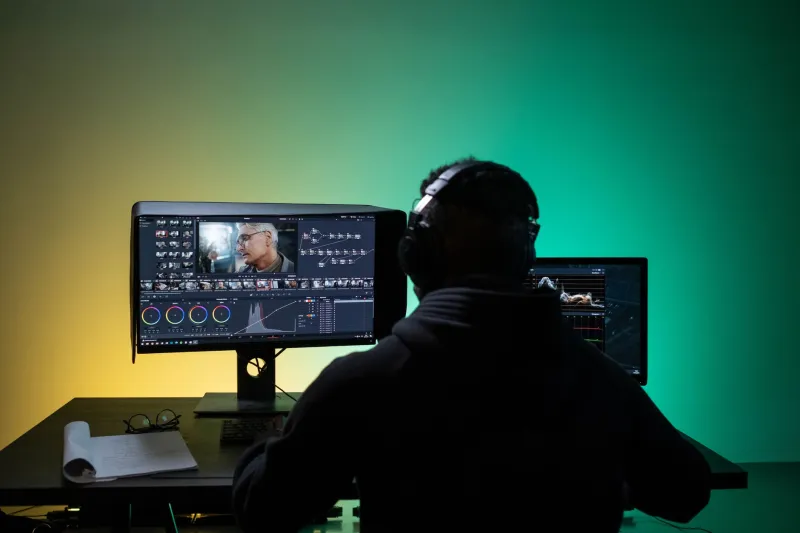
There is a particular kind of exhaustion that settles over an editing suite when a cut finally feels complete. The story tracks. The pacing breathes. The music lands. After weeks — sometimes months — of assembly, refinement, and revision, the editor leans back and types the two words that signal the end of a long campaign: picture lock.
And then, sometimes, the real work begins.
Among the most undervalued disciplines in post-production is the willingness to reopen a finished edit and interrogate it from scratch. Not because something is obviously broken, but because the most meaningful improvements rarely announce themselves. They are found only by editors who have cultivated the ability to see their own work as an audience would — without the accumulated context, emotional investment, and narrative assumptions that accumulate over the course of a long cut.
This is the second cut. It is not a safety net for sloppy work. It is a deliberate, structured practice — and it separates editors who complete films from those who elevate them.
The Familiarity Trap
The core problem with self-editing is neurological before it is creative. After extended exposure to the same footage, the human brain begins to autocomplete. An editor who has watched a particular scene forty times no longer perceives it the way a first-time viewer will. They anticipate dialogue before it arrives. They mentally smooth over awkward transitions. They fill in emotional beats that the cut itself may not actually be delivering.
This is not a character flaw — it is a predictable consequence of deep familiarity. But it means that the editor who declares a film finished is often the least qualified person in the room to evaluate whether it actually is.
The solution is not a different editor. It is time. Specifically, it is the strategic use of distance — the deliberate practice of stepping away from a locked edit for long enough that the brain releases its grip on what it expects the film to be, and begins to perceive what the film actually is.
Professional editors working on studio features often build this distance into their contracts. Independent filmmakers, operating without that structural protection, must impose it on themselves. A minimum of one week away from a locked cut is a reasonable baseline. Two weeks is better. During that period, the editor does not watch the film, does not review notes, and does not discuss specific scenes. The goal is cognitive reset — returning to the material as close to a stranger as possible.
What a Screening Reveals That a Timeline Cannot
Before the second cut begins in earnest, there is one tool that no amount of solitary review can replicate: a live audience screening.
Watching an edit in a room with other people generates information that is invisible on a timeline. Laughter that arrives a half-second late suggests a comedic beat is being undercut by an extra frame. Restlessness during an expository sequence reveals pacing problems that looked acceptable in isolation. The moment an audience collectively leans forward — or pulls back — is data that no waveform or color scope can provide.
For independent filmmakers working in the United States, this does not require a formal festival submission or a rented screening room. A trusted group of ten to fifteen viewers — ideally people unfamiliar with the project — assembled in a living room with a calibrated monitor and honest instructions to react naturally will yield more actionable intelligence than a dozen solo review sessions.
The editor's role during this screening is not to defend the film. It is to observe. Where do people shift in their seats? Where does attention visibly concentrate? Where does the room go quiet in ways that feel earned, and where does that silence feel like disconnection rather than absorption? These observations, noted without interpretation during the screening and analyzed afterward, form the foundation of the second cut's agenda.
Killing What You Love Most
The psychological resistance to reopening a locked edit is real, and it is worth naming directly. After the investment required to complete a first cut, the prospect of significant revision can feel like an admission of failure rather than an act of professional rigor. This resistance is compounded by attachment to specific moments — a performance, a transition, a sequence of images — that the editor has come to love independent of whether they serve the film as a whole.
The phrase kill your darlings is attributed variously to William Faulkner and Arthur Quiller-Couch, and it has become something of a cliché in creative writing circles. In editing, however, it retains its full force. The scenes an editor is most reluctant to cut are frequently the scenes most in need of cutting — not because they are bad, but because the emotional investment they represent has distorted the editor's ability to assess their function within the whole.
A useful technique for navigating this resistance is the hypothetical removal test. The editor isolates a scene or sequence they feel strongly about and asks a single question: if this were removed entirely, what would the audience lose? Not what would the editor lose — what would the audience lose? If the honest answer is very little, the scene is a candidate for removal regardless of how much craft it contains.
Structural Revisits Versus Surface Polish
The second cut is not the same as a color grade refinement or a sound mix adjustment. It is a structural interrogation. The editor approaches the locked timeline with a specific set of questions: Does the opening frame of the film earn the audience's attention within the first ninety seconds? Does the midpoint of the narrative actually shift the story's momentum, or does it merely occur at the chronological midpoint? Does the final scene resolve the film's central question — or simply end it?
These are different questions from those that drive the first assembly. The first cut asks whether the story can be told. The second cut asks whether it is being told as well as it could be.
This distinction has practical implications for how the second cut session is structured. Rather than opening the timeline and beginning to scroll, experienced editors often start by writing a one-paragraph description of the film from memory — what it is about, what it feels, what it means. That description is then compared against the actual cut. The gaps between the two documents are where the second cut's work lives.
The Professional Case for Never Declaring Victory
In a culture that prizes speed and output, the second cut can feel like an indulgence. Deadlines are real. Budgets are finite. Clients and collaborators have their own schedules. But the editors who have produced the most durable work in American film and television share a common characteristic: they treat the locked cut not as a destination but as a hypothesis — a strong, defensible position that remains open to revision in the face of new evidence.
That posture is not indecision. It is precision. The willingness to return to a finished edit and ask whether it could be better is among the highest expressions of editorial craft — and it is available to any filmmaker willing to resist the seductive finality of a locked timeline.
The film is never truly finished. It is only released.