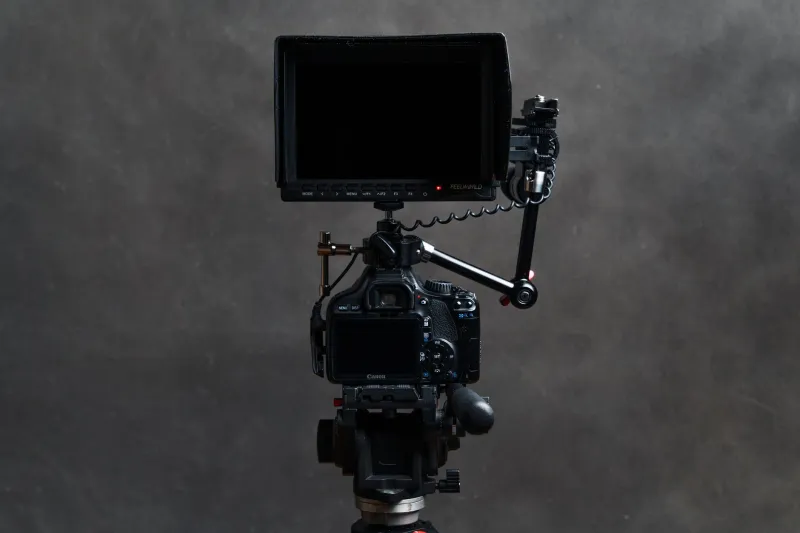
What You Don't Hear Is What You Feel: The Case for Taking Sound Design Seriously
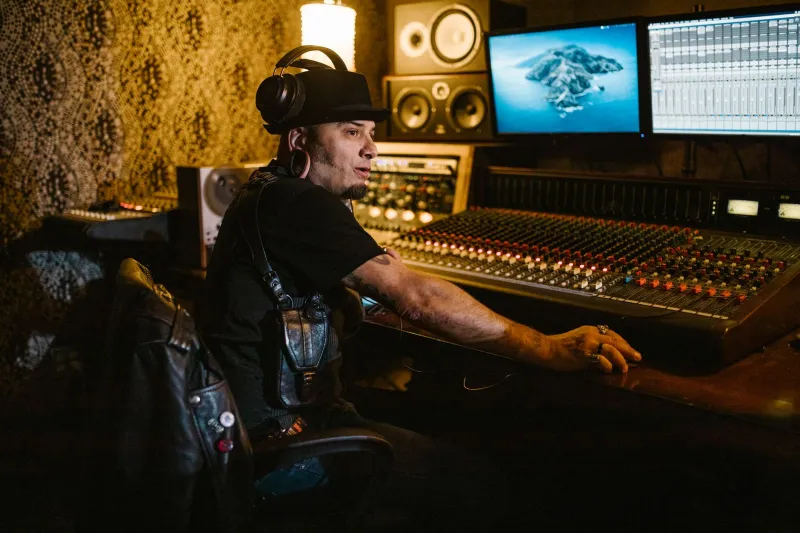
What You Don't Hear Is What You Feel: The Case for Taking Sound Design Seriously
There is a thought experiment worth conducting the next time you watch a film that genuinely unsettles you. Mute it. Watch the same scene without its audio layer. In nearly every case, the menace dissolves. The tension evaporates. What remains is a sequence of images that may be technically accomplished but emotionally inert.
This experiment reveals something that experienced sound professionals understand intuitively and that most visual media curricula address inadequately: sound is not the accompaniment to the image. In many respects, it is the emotional experience.
The Hierarchy We Got Wrong
Visual media education, particularly at the independent and self-taught level, tends to follow a predictable investment hierarchy. Aspiring creators spend months researching camera systems, obsess over lens characteristics, study color grading techniques with genuine rigor, and then — almost as an afterthought — plug in a built-in microphone or purchase the cheapest lavalier they can find.
This hierarchy reflects a misunderstanding of how audiences actually process audiovisual content. Research in psychoacoustics has consistently demonstrated that sound exerts a disproportionate influence on emotional response, perceived image quality, and narrative comprehension. A 2010 study published in the journal Cognition found that background music and ambient sound design fundamentally altered how test subjects interpreted the emotional valence of identical visual sequences. The images didn't change. The feelings did.
Hollywood's most sophisticated practitioners have understood this for generations. The question is why so few working outside that ecosystem have absorbed the lesson.
Lessons From the Craft's Greatest Practitioners
To understand what masterful sound design actually accomplishes, it helps to examine specific cases where its presence — or its deliberate absence — defined the audience's experience.
Walter Murch, the legendary sound designer and editor whose credits include Apocalypse Now and The Conversation, has spoken extensively about sound as a tool for accessing the subconscious. In Apocalypse Now, Murch famously used the sound of helicopter rotors to blend seamlessly into ceiling fan blades during the film's opening sequence — a sonic metaphor that placed the viewer inside Willard's traumatized psychology before a single line of dialogue was spoken. The effect is visceral and immediate, and it operates entirely beneath the threshold of conscious analysis.
More recently, the sound team behind Denis Villeneuve's Arrival constructed an audio landscape around the heptapod communication sequences that combined processed whale song, reversed human vocalizations, and sub-bass frequencies specifically calibrated to produce a sense of vast, non-human intelligence. The visual design of the aliens was striking. But it was the sound that made them feel genuinely alien.
In animation, the discipline carries equal weight. Pixar's sound teams have long treated audio as a primary storytelling instrument. The particular mechanical whir of WALL-E's movements, each one individually designed and performed, did more to establish his personality than any visual character design choice. Sound gave him interiority.
Independent productions have demonstrated this principle with remarkable economy. The micro-budget horror film A Quiet Place, produced for approximately $17 million — a fraction of typical studio horror budgets — built its entire dramatic architecture around the manipulation of sound and silence. The film's central conceit demanded that its sound design be both the subject of the story and the primary vehicle for its tension. The result was one of the most effective horror experiences of the past decade, achieved not through visual spectacle but through audio discipline.
The Psychology Beneath the Perception
Understanding why sound design works requires a brief excursion into auditory neuroscience. Human beings process sound through the auditory cortex, but low-frequency sounds — those below approximately 20 Hz, sometimes called infrasound — interact with the body's physical structure in ways that bypass conscious perception entirely. Several researchers, including Vic Tandy whose work in the late 1990s explored infrasound in supposedly haunted environments, have documented the capacity of sub-20 Hz frequencies to induce feelings of unease, disorientation, and even visual disturbances.
Film composers and sound designers have exploited this phenomenon deliberately. The unsettling effectiveness of certain horror film soundscapes owes as much to their sub-bass frequency content as to any melodic or harmonic element. The audience does not hear the threat. They feel it in their chest.
At higher frequencies, the dynamics are equally sophisticated. Silence, in a context that has established a rich ambient soundscape, functions as a kind of negative space that the human auditory system interprets as threat or anticipation. The sudden removal of ambient sound is neurologically processed as an anomaly — a signal that something in the environment has changed and that attention is required. Skilled sound designers use this reflex deliberately, pulling the audio floor out from under the audience precisely when maximum attention is needed.
The Practical Gap in Creator Education
Despite the discipline's centrality to effective visual storytelling, sound design remains dramatically underrepresented in the educational resources most independent creators access. YouTube tutorials on color grading outnumber those on sound design by a ratio that reflects the field's general neglect. Film school curricula, even at well-regarded institutions, often treat sound as a supporting discipline rather than a co-equal creative practice.
The consequences are audible in a great deal of independent work. Dialogue that sits unnaturally in its acoustic environment. Ambient sound that was recorded rather than designed. Musical choices that describe the emotion on screen rather than deepening or complicating it. These are not technical failures. They are creative ones, born of insufficient investment in a craft that rewards deep study.
A Starting Framework for Serious Practitioners
For visual media professionals ready to close this gap, the entry points are more accessible than they may appear.
Begin with critical listening. Before purchasing equipment or software, develop the habit of watching films and video content with your eyes closed for significant stretches. Analyze what the audio alone is communicating. Identify the layers: dialogue, ambient sound, Foley, music, designed sound effects. Notice how they interact and what each contributes independently.
Study the three-layer model. Professional sound design typically operates across three primary layers — the diegetic (sounds that exist within the story world), the non-diegetic (music and narration that exist outside it), and the trans-diegetic (sounds that move between these states). Understanding how these layers interact is foundational to designing rather than merely recording audio.
Invest in a proper recording chain. A quality directional microphone such as the Sennheiser MKH 416, a reliable portable recorder like the Zoom H5 or H6, and a basic set of acoustic baffles represent a meaningful but achievable investment that will transform the raw material available in post-production.
Learn a dedicated digital audio workstation. Adobe Audition, Pro Tools, and iZotope RX are industry-standard tools with substantial educational resources available. Reaper offers comparable functionality at a dramatically lower price point and has a devoted community of independent practitioners.
Build a personal sound library. Field recording — capturing ambient environments, mechanical sounds, natural textures — is both a practical resource-building exercise and a profound education in how the sonic world is constructed. The discipline of listening carefully enough to record well will permanently alter how you design audio.
The Competitive Advantage Hidden in Plain Hearing
For independent creators and visual media professionals operating in an increasingly saturated landscape, sound design represents one of the most accessible sources of genuine differentiation. It is a discipline that most competitors underinvest in, that audiences respond to with powerful emotional consistency, and that rewards sustained study with compounding creative returns.
The moving image has always been, in truth, a moving image and a moving sound. The professionals who understand both halves of that equation with equal fluency are the ones whose work lingers — not just in the memory, but in the body.