When to Stop Listening: The Selective Collaboration Skills Every Serious Filmmaker Must Develop
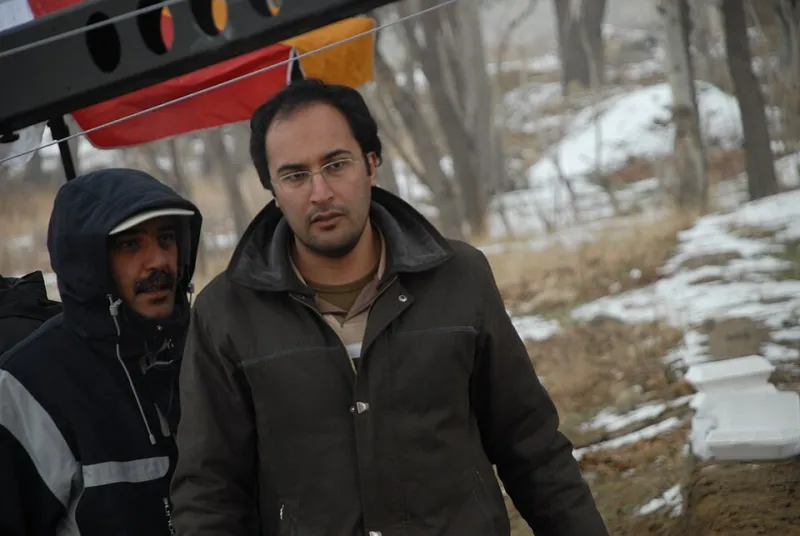
Photo: Iammoradi, CC BY-SA 4.0, via Wikimedia Commons
Filmmaking is, by its very nature, a collective endeavor. Directors depend on cinematographers to translate their spatial instincts into light and shadow. Editors reshape the raw architecture of a story frame by frame. Sound designers breathe texture into silence. The industry celebrates collaboration as an almost sacred virtue, and rightly so—great films rarely emerge from isolation.
And yet, there is a truth that experienced visual media professionals understand but seldom articulate aloud: the most consequential creative decisions are often made by one person, in defiance of everyone else in the room.
This is not a contradiction. It is, in fact, the central paradox of professional collaboration.
The Feedback Trap
When a project enters the feedback phase—whether at script, rough cut, or color grade—the volume of incoming opinion can become genuinely disorienting. Studio notes, producer concerns, test audience data, and well-meaning suggestions from trusted colleagues all arrive simultaneously, each carrying its own weight and urgency.
The instinct to accommodate, to synthesize, to demonstrate that one has listened carefully, is understandable. Creative professionals are trained to be receptive. Film schools reward the ability to incorporate notes gracefully. Industry culture frames openness to feedback as professionalism.
But accommodation without discernment is not collaboration—it is erosion. And the directors, cinematographers, and editors who have built enduring bodies of work are, without exception, people who learned to distinguish between the two.
David Fincher's production history offers a useful illustration. Known for his exacting control over visual grammar and pacing, Fincher has spoken openly about his resistance to notes that feel intuitive rather than analytical. His collaborators—many of whom return repeatedly to work with him—describe an environment in which feedback is welcomed, examined rigorously, and then either integrated or discarded with equal deliberateness. The key is that the process is never passive. Every note is interrogated, not simply received.
What Useful Criticism Actually Sounds Like
The first practical skill in selective collaboration is learning to identify feedback that diagnoses rather than prescribes. There is a meaningful difference between a collaborator saying, "I feel disconnected from the protagonist in the second act," and one saying, "You should cut the scene in the kitchen entirely."
The former describes an experiential problem. The latter proposes a solution—one that may or may not address the underlying issue. A director who acts on the second note without examining the first may eliminate a scene that is not, in fact, the source of the audience's disengagement. The real problem might be pacing, performance, or a missing transitional beat elsewhere.
Strong creative leaders train themselves to receive the problem and resist the proposed solution. They mine feedback for the emotional truth embedded within it, then generate their own response to that truth. This approach honors the collaborator's experience while preserving the director's interpretive authority.
Editor Walter Murch, whose work on Apocalypse Now and The English Patient set benchmarks for the craft, has described something similar in how he processes director feedback during the editing process. He listens for the feeling a director is chasing, not the specific cut they are requesting. That distinction, he has suggested, is where genuine editorial judgment lives.
Building a Filter, Not a Wall
Rejecting feedback indiscriminately is not vision—it is ego. The goal is not to become impervious to outside perspective but to develop a reliable internal filter that can assess input without being overwhelmed by it.
Several practical frameworks help structure this assessment.
Source proximity matters. Feedback from someone who has read the script, reviewed the cut, and understands the project's intentions carries different weight than a note from an executive who encountered the material for the first time ninety minutes ago. Calibrate accordingly.
Frequency signals something, even when specifics do not. If multiple viewers independently flag confusion about the same moment—even if each suggests a different fix—the moment itself requires attention. The convergence of concern is the data point, not the remedies.
Emotional discomfort in the creator is not the same as creative error. Some of the most powerful material in a project will feel uncomfortable to its maker. A director who removes challenging material because a note triggered personal doubt rather than logical concern has allowed anxiety to masquerade as editorial judgment.
Time-delaying the response is often the most productive intervention. Sleeping on a note before acting on it allows the reactive emotional response to settle and the analytical response to surface. Many experienced filmmakers report that notes which felt urgent at first viewing become obviously irrelevant by the following morning—and vice versa.
The Organizational Culture of Selective Listening
For creative leaders managing larger teams, the implications extend beyond individual decision-making. The culture a director or showrunner establishes around feedback shapes whether talented collaborators feel safe bringing genuine insight to the table—or whether they learn to perform agreement instead.
A set or edit suite where every counter-perspective is dismissed quickly becomes a space where only one voice is being heard, regardless of how many people are in the room. The best creative environments are ones in which disagreement is welcomed, examined seriously, and then resolved with clarity. The key word is resolved—not prolonged indefinitely, and not decided by committee vote, but settled by the person whose creative vision animates the project.
This requires a particular kind of confidence: the confidence to say, clearly and without apology, "I hear you, I've considered it, and I'm going in a different direction." That sentence, delivered with genuine respect rather than dismissiveness, is one of the most powerful tools a creative leader possesses.
The Long View
Films that endure tend to carry the unmistakable imprint of a single animating sensibility, even when they were built by large, talented teams. That is not an argument against collaboration—it is an argument for the kind of collaboration that sharpens rather than softens the central creative impulse.
The paradox is real: the best collaborators in visual media are also, at critical moments, the ones most willing to stop listening. Not out of arrogance, but out of a hard-won understanding of what the work requires—and what it cannot afford to lose.