Borrowed Truth: How Fiction Filmmakers Are Mining Documentary Technique to Build Audience Trust
For most of cinema's history, the boundary between documentary and fiction filmmaking was treated as more or less absolute. Documentaries observed; fiction films constructed. Documentaries captured; fiction films fabricated. The two forms shared a medium but operated according to entirely different aesthetic and ethical contracts with the audience.
That boundary has been dissolving for decades, but the pace of dissolution has accelerated sharply in recent years. Across American independent film, prestige television, and even mainstream studio productions, scripted creators are deliberately importing the visual language, production methodology, and philosophical orientation of documentary filmmaking — not to blur genre categories, but to access something that documentary has always possessed and fiction has perpetually struggled to manufacture: the audience's instinctive sense that what they are watching is real.
The Authenticity Economy
To understand why this is happening now, it is worth examining the cultural context in which contemporary audiences consume visual media. American viewers in 2024 are among the most media-literate in history. They have been raised on reality television, social media video, and documentary content across streaming platforms. They are, consciously or not, highly attuned to the visual and behavioral markers of constructed versus observed footage.
The conventional grammar of narrative filmmaking — clean lighting setups, stabilized camera movement, performance precision, production design that is too complete — registers to this audience not as quality but as artifice. And artifice, in an era saturated with content competing for emotional engagement, is a liability.
Documentary aesthetics, by contrast, carry an implicit credibility signal. Handheld camera movement suggests a cameraperson responding to events rather than choreographing them. Available light implies a production that prioritized access over control. Overlapping dialogue and imperfect line readings read as behavioral truth rather than theatrical performance. These signals communicate, beneath the level of conscious analysis, that the audience is witnessing rather than watching.
Fiction filmmakers have identified this credibility signal and are actively engineering it into scripted work.
How the Technique Transfer Works
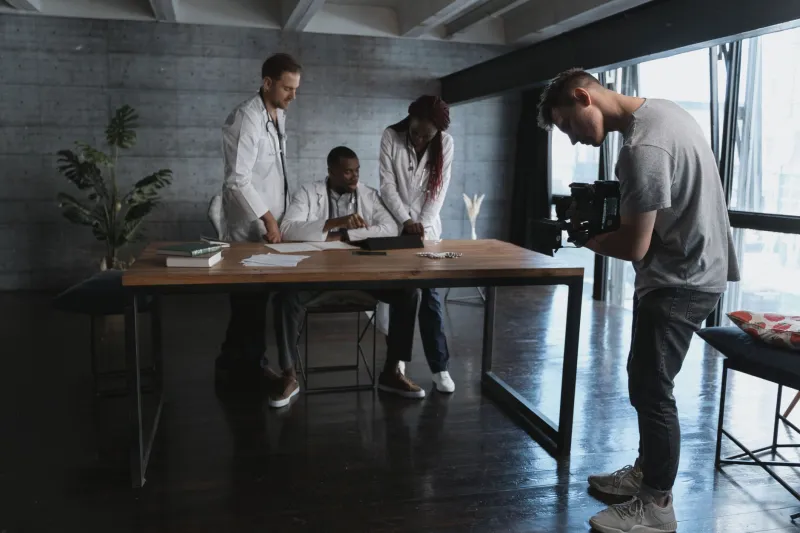
The adoption of documentary methodology in fiction production is not cosmetic. The most effective practitioners are not simply asking their cinematographers to shake the camera. They are restructuring the entire production approach around principles borrowed from nonfiction filmmaking.
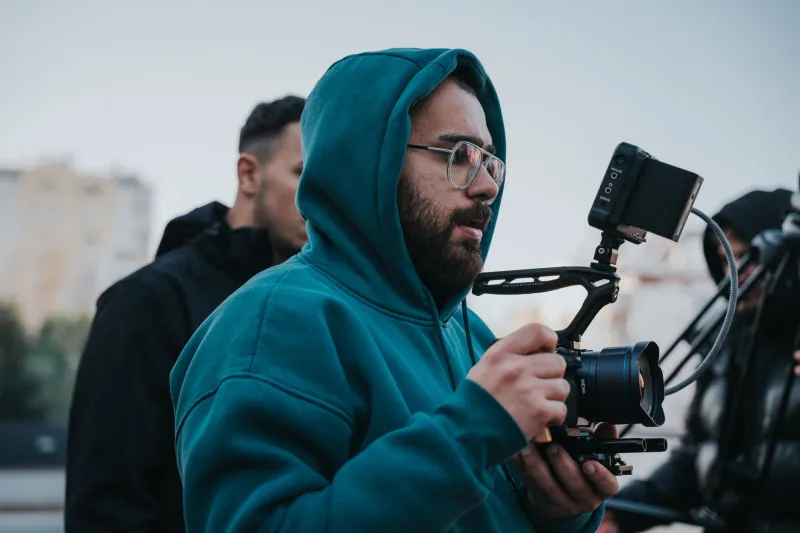
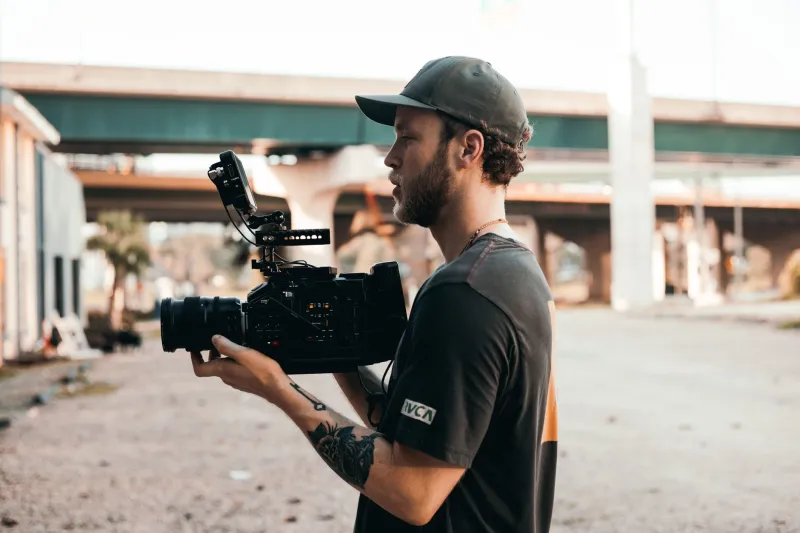
Camera philosophy. Documentary cinematography is fundamentally responsive rather than prescriptive. The camera follows behavior; it does not lead it. In fiction productions that have internalized this approach — films like Tangerine, Beasts of the Southern Wild, and the work of the Safdie brothers — camera operators are often given significant latitude to respond to performance in real time. This produces images that feel discovered rather than composed, which aligns precisely with the audience's documentary credibility heuristics.
Lighting design. The deliberate use of available or motivated light sources — practical lamps, windows, street lighting — removes the visual signature of professional lighting equipment from the frame. This is not laziness; it is a sophisticated choice that requires considerable skill to execute without sacrificing image quality. Cinematographers like Haskell Wexler pioneered this approach in American cinema, and its influence has grown substantially through the work of directors who prioritize behavioral truth over pictorial perfection.
Performance methodology. Perhaps the most significant borrowing is structural. Documentary filmmakers work with subjects whose behavior they cannot fully script or control; the skill lies in creating conditions and asking questions that allow authentic responses to emerge. A growing number of fiction directors are applying analogous methods to their actors — providing structural guidance and emotional parameters while allowing significant improvisation within scenes. Directors like Lynn Shelton built entire careers on this methodology, and her influence is visible across a generation of American independent filmmakers.
Location and production design. The decision to shoot in real locations rather than constructed sets introduces an uncontrollable visual complexity that documentary footage carries by default. Real environments have history, texture, and imperfection that set construction rarely achieves convincingly. Productions that commit to real locations — even when logistically challenging — inherit a visual authenticity that communicates itself to audiences without explanation.
Case Studies in Genre Hybridization
Several recent American productions illustrate the sophistication with which documentary technique is being deployed in scripted contexts.
The Safdie brothers' Uncut Gems is perhaps the most discussed recent example. Every element of the production — the handheld cinematography, the overlapping improvised dialogue, the location shooting in New York's Diamond District, the casting of non-professional performers alongside trained actors — was calibrated to produce the sensation of an observed reality rather than a constructed one. The result was a fiction film that generated the physiological stress response typically associated with documentary footage of actual crisis situations.
In television, The Bear on FX represents a similarly deliberate hybridization. The show's kitchen sequences, shot in near-documentary style with responsive camera work and naturalistic sound design, created a sense of immersive presence that distinguished it immediately from conventionally produced food industry dramas. The documentary aesthetic was not incidental — it was the primary mechanism through which the show established emotional authority.
What Fiction Creators Risk — and What They Gain
The adoption of documentary methodology is not without creative and practical complications. Improvisation within structure requires actors with sufficient craft to generate authentic behavior without losing narrative coherence. Responsive camera work demands cinematographers who can compose intuitively under pressure. Location shooting introduces variables that production planning cannot always absorb.
More fundamentally, the documentary aesthetic carries an implicit promise to the audience — a promise of unmediated access to truth. When fiction filmmakers make that promise through their visual language, they take on an obligation to honor it through performance and story. A documentary-style production that feels emotionally false is more damaging than a conventionally produced film that makes no such claim.
But for practitioners who execute the methodology with integrity, the gains are substantial. Audiences who feel they are witnessing rather than watching become more emotionally invested, more willing to follow characters into difficult material, and more likely to attribute the emotional impact of the film to something real rather than something constructed.
In an industry where audience trust is increasingly difficult to earn and easily lost, that is not a minor advantage. It is a competitive differentiator of the first order.
Implications for the Industry
The mainstreaming of documentary technique in fiction filmmaking has several implications for industry professionals across disciplines. For producers, it suggests that production value is increasingly defined by behavioral authenticity rather than technical perfection — a shift that has real consequences for how budgets are allocated and how production is structured. For directors and cinematographers, it represents an argument for cross-disciplinary training: fluency in documentary methodology is no longer a niche specialization but a broadly applicable creative skill.
For screenwriters, perhaps most significantly, it raises questions about the nature of the script itself. A production philosophy built around structured improvisation and responsive camera work requires a different kind of blueprint than conventional three-act construction. The script becomes less a finished architecture and more a set of generative conditions — a shift that demands both flexibility and precision from the writer.
The documentary impulse in fiction filmmaking is not a trend that will resolve cleanly back into established genre categories. It reflects a fundamental recalibration of what American audiences expect from visual storytelling — and the industry's most perceptive creators are already building their practice around that new expectation.