Forget the Gear: Why the Real Cinematic Bottleneck Has Always Been You
There is a particular ritual familiar to anyone who has spent time in filmmaking forums, Discord servers, or the comment sections of YouTube gear reviews. Someone posts a short film. The work is emotionally resonant, visually confident, and technically coherent. Within minutes, the conversation shifts — not to the story, not to the performances, not to the editing rhythm — but to one consuming question: What camera did they shoot on?
This is the gear trap. And it is costing American independent filmmakers far more than money.
The $500 Question Nobody Wants to Answer Honestly
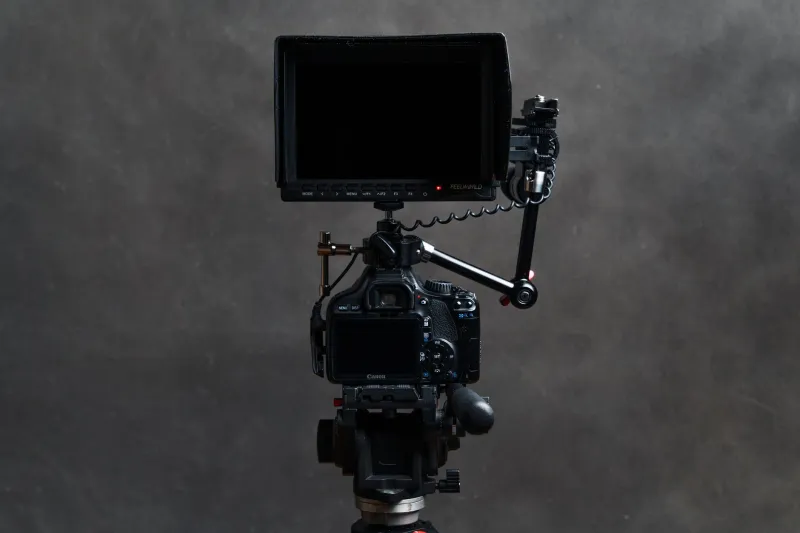
Over the past decade, the price floor for professional-quality image capture has collapsed in ways that would have seemed implausible to a working cinematographer in 2005. The Sony ZV-E10, the DJI Osmo Pocket 3, and a growing roster of sub-$600 mirrorless cameras are producing footage that, when graded with intention and lit with craft, holds its own against imagery captured on systems costing ten times as much. More provocatively, several films shot entirely on current-generation iPhones have screened at Sundance, SXSW, and Tribeca — not as novelty acts, but as genuine competition entries evaluated on their merits.
Sean Baker's Tangerine, shot on an iPhone 5S with an anamorphic adapter, is now a canonical reference point in this conversation. But what often gets lost in the retelling is that Baker had already directed five feature films before picking up that phone. The tool was unremarkable. The filmmaker was not.
That distinction matters enormously.
What Working Filmmakers Are Actually Saying
Speak to independent directors who are actively producing festival-caliber short films on constrained budgets across the US, and a consistent picture emerges. The camera is rarely the subject of creative anxiety. The craft elements that demand the most attention — and the most financial investment when resources allow — are lighting, sound, and post-production time.
Directors working in markets like Atlanta, Austin, and Chicago consistently report that their production value conversations center on whether they can afford a proper lighting package for a night exterior, whether the location acoustics will require ADR work in post, and whether they have the editorial bandwidth to cut multiple versions of a scene. The sensor size of their camera is, at best, a secondary concern.
This is not a romantic argument for poverty filmmaking. It is a practical observation about where cinematic quality actually lives.
The Lighting Budget You Aren't Having
Consider a common scenario among emerging filmmakers: a $1,200 production budget allocated primarily toward a camera body upgrade, leaving minimal resources for grip equipment, lighting, or sound. The resulting footage is technically sharp but visually flat — a problem that no amount of color grading will fully resolve, because the dynamic range captured was compromised at the source. The camera, in this instance, was not the limiting factor. The lighting was.
A more strategically sound allocation of that same $1,200 might involve renting a capable camera for the shooting days, investing in even a modest set of LED panels and diffusion materials, and budgeting for a dedicated sound recordist. The resulting footage, shot on rented equipment rather than owned, would likely demonstrate a far more significant leap in perceived production value.
This is not a hypothetical. It is a framework that experienced low-budget producers return to repeatedly, because it reflects where the visual quality ceiling actually sits.
The Gear Industry's Vested Interest in Your Insecurity
It would be incomplete to discuss equipment culture without acknowledging the commercial ecosystem that sustains it. Camera manufacturers, accessory brands, and the vast content infrastructure built around gear reviews have a direct financial interest in perpetuating the belief that the next body, the next lens, the next gimbal will unlock creative potential that is currently just out of reach.
This is not a conspiracy — it is simply the logic of consumer marketing applied to a creative industry. But filmmakers who internalize this framing become perpetual consumers rather than developing practitioners. They upgrade their tools while their fundamental storytelling craft — their understanding of scene construction, visual rhythm, performance direction, and emotional architecture — remains static.
The moving image, as a medium, rewards the practitioner who understands how to construct meaning across time. That understanding is built through making work, analyzing work, and refining judgment. None of those activities require a new camera.
Where the Real Investment Should Go
If the bottleneck is not the camera, where should developing filmmakers direct their resources? Several categories consistently yield returns that equipment upgrades cannot match.
Education and craft development remain undervalued. Formal programs, workshops run by organizations like Film Independent or the Austin Film Society, and rigorous self-directed study of cinematography, editing theory, and narrative structure all compound over time in ways that a sensor upgrade does not.
Collaboration networks represent another area of asymmetric return. A skilled colorist, a talented sound designer, or an experienced production designer will elevate footage shot on modest equipment far more reliably than a camera upgrade elevates footage produced in isolation.
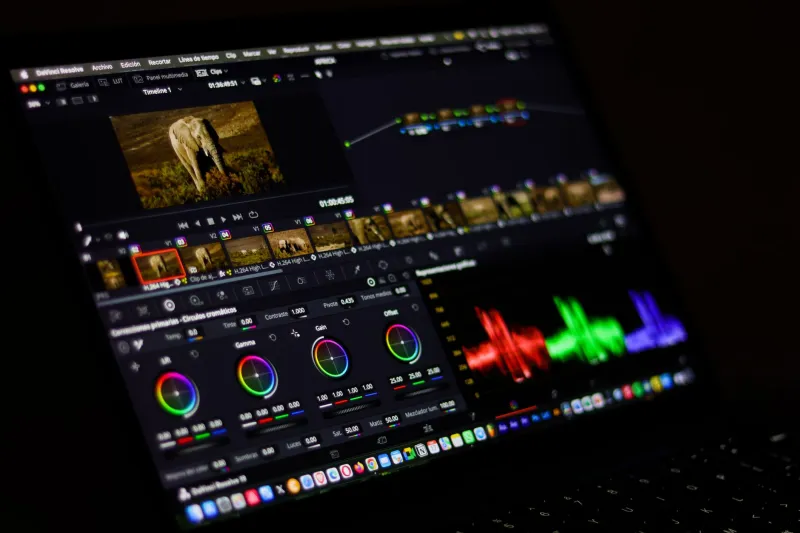
Time in post-production is perhaps the most consistently underestimated investment. The filmmakers producing the most visually distinguished work on limited budgets tend to be those who treat the edit and the color grade as primary creative phases rather than corrective afterthoughts.
The Honest Assessment
Modern budget cameras have genuinely narrowed the technical quality gap. That is real, and it is worth acknowledging without qualification. A filmmaker working today with $500 to spend on a camera body has access to imaging capabilities that would have required a $50,000 investment twenty years ago. The democratization of image capture is not a myth.
But democratization of access is not the same as democratization of quality. The camera captures light. It does not generate vision, construct tension, or communicate meaning. Those remain the exclusive province of the person behind it — and developing that person is the only investment that produces compounding creative returns.
The bottleneck was never the camera. It was always the filmmaker. That is not a discouraging observation. It is, in fact, the most empowering truth available to anyone serious about this craft.