Plant, Echo, Resonate: How Elite Directors Engineer Visual Callbacks That Audiences Feel Before They Understand
There is a specific kind of cinematic pleasure that has nothing to do with plot twists or action sequences. It is quieter, more interior — the sensation of watching a film and suddenly recognizing an image you have seen before, now transformed by everything that has happened since. That recognition produces something remarkable: the audience feels intelligent. They feel seen. They feel, in the most literal sense, that the film was made for them.
This is the callback shot — and it is not an accident.
The most accomplished directors working in American cinema today treat visual repetition as a structural tool, not a stylistic flourish. They engineer these moments with the same deliberateness that a novelist applies to recurring metaphor or a composer applies to a returning theme. For independent filmmakers who want to elevate their work beyond competent execution, understanding this technique is not optional. It is foundational.
What a Callback Shot Actually Is
A callback shot is a deliberate visual echo — a composition, camera angle, blocking arrangement, or framing choice that reappears at a meaningful point in a film, carrying accumulated weight from its first appearance. The term borrows from stand-up comedy, where a callback retrieves an earlier joke to generate a second, amplified laugh. In film, the mechanism is identical, but the emotional register can span the full spectrum from grief to triumph to dread.
The critical distinction is intentionality. Accidental visual repetition is simply inconsistency. A true callback requires that the first instance be planted with enough clarity that it registers — consciously or subconsciously — and that the return arrives at a moment when the accumulated narrative context transforms its meaning entirely.
This is a two-part contract between filmmaker and audience. The filmmaker must plant with care. The audience, in turn, does the interpretive work, and that act of interpretation is precisely what generates the emotional payoff.
How Christopher Nolan Builds Cognitive Resonance
Christopher Nolan's filmography offers some of the most studied examples of visual callback architecture in contemporary American cinema. His approach tends toward the structural — callbacks that reinforce thematic arguments rather than simply emotional beats.
In Inception, the recurring image of Cobb's spinning top functions as a planted motif from its earliest appearance. But Nolan's more sophisticated deployment of visual repetition operates at the level of spatial geometry. The stacked, folding cityscapes of the dream sequences are visually echoed in the film's practical environments — staircases, hotel corridors, and reflective surfaces — long before the full mechanics of dream architecture are revealed. By the time the grand set pieces arrive, audiences have been visually primed. The images feel simultaneously new and familiar, producing the uncanny sensation that the film calls upon throughout.
The lesson for working filmmakers is that callbacks need not be literal. A recurring geometric form, a consistent use of depth of field, or a repeated relationship between foreground and background can function as a visual motif just as effectively as a specific prop or location.
Ari Aster and the Grammar of Dread
Ari Aster operates in a different register entirely. Where Nolan's callbacks tend to produce intellectual recognition, Aster's are designed to generate retroactive horror — the realization that something sinister was present long before you understood what you were looking at.
In Hereditary, the film's most devastating callback involves the recontextualization of images the audience has already processed as innocent. Specific framings of the family home, the recurring geometry of the miniature dioramas, and the precise blocking of characters within doorframes all accumulate meaning across the film's runtime. When they return in altered form, the audience experiences not just shock but a specific kind of retrospective dread — the sense that they should have known.
Aster achieves this by treating his visual motifs with unusual consistency in their initial appearances. The compositions are held long enough, and repeated frequently enough, that they register as grammar rather than decoration. When that grammar is violated or inverted in the film's final act, the disruption carries enormous weight.
For independent filmmakers, this is a crucial technical insight: the callback only works if the plant is strong. A motif introduced too briefly, or framed too casually, will not survive in the audience's visual memory long enough to pay off.
Greta Gerwig and the Emotional Rhyme
Greta Gerwig's approach to visual repetition is arguably the most accessible model for independent filmmakers working outside genre conventions. In both Lady Bird and Barbie, Gerwig uses callback shots not to generate dread or intellectual complexity, but to create what might best be described as emotional rhyme — moments where a returned image reframes a character's entire arc.
In Lady Bird, the recurring visual of the Sacramento landscape — seen from car windows, from the air, from the margins of ordinary scenes — accumulates meaning so gradually that its final appearance lands with a force entirely disproportionate to its apparent simplicity. The image has not changed. The character has. And because the audience has traveled that distance with her, the recognition is deeply personal.
Gerwig's technique reveals an important principle: callbacks are fundamentally about character interiority. The most effective visual echoes are those where the changed meaning of a returned image reflects the changed inner state of the person experiencing it — whether that person is the protagonist or the audience themselves.
The Editor's Role in Spacing and Timing
Directors plant the motifs. Editors determine whether they land.
The spacing between a callback's first and second appearance is one of the most consequential editorial decisions in a film. Too short, and the repetition feels redundant rather than resonant. Too long, and the audience may not retain the visual memory necessary for recognition. The ideal interval depends on the specificity of the image, the density of the intervening material, and the emotional temperature the filmmaker is working toward.
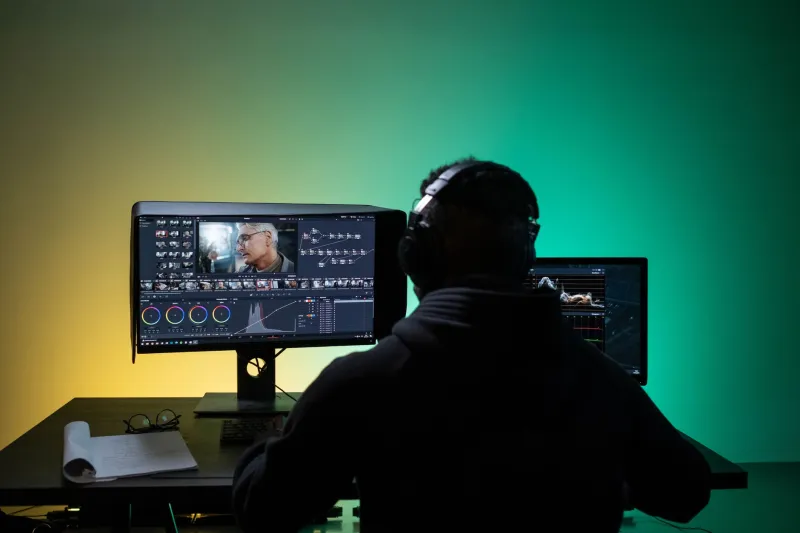
Editors working with callback structures should resist the instinct to over-clarify. A callback that is held too long on its second appearance, or that is underscored too heavily with music, collapses the interpretive space the audience needs to do their own work. The goal is recognition, not announcement. The best callbacks feel discovered rather than delivered.
Additionally, editors should consider the visual contrast between the plant and the return. Slight shifts in lighting, framing, or performance within an otherwise identical composition can amplify meaning without telegraphing intent.
Designing Visual Rhymes Before the Camera Rolls
For independent filmmakers, the most practical implication of all of this is straightforward: callbacks must be designed at the script stage. Attempting to engineer visual repetition in post-production, working from footage that was not conceived with this intention, is an exercise in limitation.
The process begins with identifying your film's core emotional argument — the specific feeling or understanding you want the audience to carry out of the theater. Then work backward: what image, composition, or visual relationship could serve as a vessel for that argument? Where could it be introduced without drawing undue attention to itself? Where should it return, and in what altered form?
This is not a complex process, but it requires deliberate thought before production begins. Build a short visual motif document alongside your script. Identify three to five images that could carry thematic weight across your film's runtime. Discuss them explicitly with your cinematographer and production designer so that the plant is executed with enough precision to survive in the audience's memory.
The callback shot is not a technique reserved for directors with studio budgets and multiple films behind them. It is available to any filmmaker willing to think architecturally about the images they are building — to treat each frame not as a discrete unit, but as a note in a longer composition. When that composition resolves, the audience will feel it before they can name it. And that, ultimately, is what moving images are for.