Frames Per Second, Feelings Per Scene: The Emotional Science Behind Frame Rate Decisions
For most of cinema's history, 24 frames per second was not a creative choice — it was an economic one. Early sound-era studios settled on 24fps because it was the slowest speed at which synchronized audio remained intelligible, and therefore the cheapest viable option. Decades later, that number had calcified into something far more powerful than a technical specification. It had become the grammar of cinematic emotion.
Today, that grammar is being actively rewritten. Streaming platforms, game engine-rendered productions, and a new generation of filmmakers armed with mirrorless cameras and variable frame rate options are forcing a long-overdue conversation: what does frame rate actually do to an audience, and how can visual media professionals use that knowledge with intention?
Why 24fps Feels Like a Dream
The answer begins in the brain. When audiences watch footage shot at 24fps, the slight motion blur inherent to each frame — a byproduct of the camera's shutter speed relative to its frame rate — triggers a perceptual softening that the human visual system interprets as distant, mediated, and therefore cinematic. Researchers studying motion perception have noted that this blur creates a kind of temporal smoothing that our brains associate with memory and imagination rather than lived experience.
In practical terms, 24fps tells your audience: this is a story. It creates psychological distance, and that distance is not a flaw. It is the very mechanism that allows viewers to suspend disbelief, to accept that a person on screen is simultaneously a character and an actor, and to invest emotionally in a constructed narrative.
Raise that frame rate to 60fps or beyond, and the contract changes entirely.
The Hobbit Problem and the HFR Backlash
When Peter Jackson released The Hobbit: An Unexpected Journey in 48fps HFR (High Frame Rate) in 2012, the response from audiences and critics was swift and largely negative. Viewers described the film as looking like a BBC television drama, a behind-the-scenes documentary, or even a video game cutscene. The immaculate clarity of 48fps, rather than drawing viewers deeper into Middle-earth, seemed to expose every prosthetic, every set seam, every performance choice.
This phenomenon — commonly called the soap opera effect — is well-documented in both consumer electronics and professional production circles. Television manufacturers have long used motion interpolation to artificially raise the apparent frame rate of broadcast content, and the result consistently reads as cheap or overly literal to trained and untrained viewers alike.
What Jackson's experiment revealed was not a failure of execution but a fundamental truth about cinematic perception: higher fidelity is not always higher immersion. The brain, conditioned by decades of 24fps storytelling, interprets hyper-smooth motion as real life, and real life carries none of the narrative permission that cinema grants. When something looks like documentary footage, audiences begin to evaluate it like documentary footage — scrutinizing rather than surrendering.
When Breaking the Convention Becomes the Point
And yet, that scrutiny can itself be a tool.
Directors working in horror have experimented with sudden frame rate shifts to induce discomfort. Sequences shot at higher fps during moments of violence or psychological fracture can make those scenes feel uncomfortably immediate — closer to trauma than to drama. The effect, when used sparingly, can be genuinely destabilizing in ways that traditional cinematography cannot replicate.
Documentary filmmakers, conversely, have long leaned into the verisimilitude of higher frame rates precisely because they want audiences to believe they are witnessing something unmediated. The frame rate choice is, in those contexts, an argument about truth.
Video game cinematics represent perhaps the most complex frontier. Productions rendered in Unreal Engine or similar real-time tools increasingly deliver content at 60fps as a default, and audiences for that content — predominantly younger, gaming-literate viewers — carry entirely different frame rate conditioning than traditional moviegoers. For that demographic, 60fps does not signal cheapness. It signals presence.
Streaming Platforms and the Quiet Renegotiation
Netflix, Apple TV+, and Amazon Prime Video have each published technical delivery specifications that accommodate — and in some cases encourage — content delivered at frame rates above 24fps. HDR and high-frame-rate delivery are increasingly bundled as premium format offerings, and as 4K displays with high refresh rates become the American household standard, the practical argument for sticking rigidly to 24fps weakens.
This does not mean 24fps is dying. It means the choice is becoming genuinely meaningful in a way it never was when it was the only viable option. Professionals working in commercial content, branded video, and short-form streaming fare may find that 30fps or even 60fps serves their material better — particularly when the goal is immediacy, transparency, or a sense of live-event energy.
Long-form dramatic storytelling, however, still benefits enormously from the psychological distance that 24fps provides. The frame rate supports the fiction.
Practical Guidance for Visual Media Professionals
For practitioners navigating these decisions on active productions, the following framework offers a useful starting point:
Default to 24fps for narrative drama. The emotional infrastructure built around this frame rate over a century of cinema is not trivial. It earns trust with audiences before a single line of dialogue is spoken.
Use higher frame rates as a deliberate disruption. If a sequence demands hyperreality — surveillance footage, a character's dissociative episode, a violent confrontation meant to feel unfiltered — consider a frame rate shift as a cinematographic statement rather than a technical upgrade.
Know your delivery platform and your audience. Content destined for YouTube or TikTok, viewed primarily on mobile devices, behaves differently than content designed for a theatrical run. Gaming-adjacent audiences and younger demographics carry different frame rate expectations than traditional filmgoers.
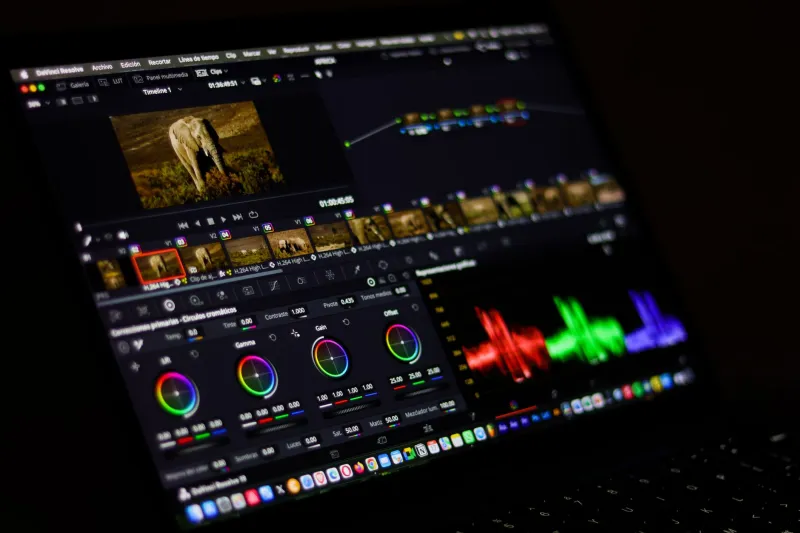
Consult your colorist and post-production team early. Frame rate decisions have significant downstream effects on motion blur, stabilization, slow-motion options, and color grading workflows. A choice made on set without post-production input can create costly complications in the edit.
Test before you commit. Shoot reference footage at multiple frame rates during pre-production and screen it with trusted collaborators. The difference between 24fps and 30fps is often subtle on paper and visceral on a monitor.
Moving Forward at Any Speed
The moving image has always been an illusion — a sequence of still photographs projected fast enough to trick the brain into perceiving motion. Frame rate is simply the speed of that trick, and like every other element of visual storytelling, it communicates before the audience is consciously aware of it.
The most skilled filmmakers and content creators are not those who follow frame rate conventions blindly, nor those who abandon them for novelty's sake. They are the ones who understand precisely what those conventions are doing to an audience's nervous system — and who make their choices accordingly.
In an era when the technical barriers to experimenting with frame rate have effectively disappeared, the creative responsibility to understand its emotional weight has never been greater.