The Art of Doing Nothing: Why Hollywood's Boldest Directors Are Learning to Stop
The Art of Doing Nothing: Why Hollywood's Boldest Directors Are Learning to Stop
There is a particular kind of discomfort that settles into a theater when a scene refuses to end on schedule. The dialogue has concluded. The plot point has landed. And yet the camera lingers — on a face, a window, a hand resting on a table. Audiences shift. Some lean forward. A few hold their breath without quite knowing why. This is not an accident. It is craft.
In an industry that frequently conflates speed with sophistication, a countermovement has been gaining quiet traction. Directors working across both the American independent circuit and major studio productions are making increasingly deliberate choices to slow their films down — not out of indulgence, but out of a precise understanding of how the human mind processes story. The result is a body of contemporary work that treats pacing not as a byproduct of editing but as a primary expressive language.
Rhythm as Narrative Infrastructure
Most filmmakers understand rhythm in the abstract. Fewer treat it as a structural discipline. The distinction matters enormously.
When rhythm is understood abstractly, it tends to be addressed in post-production — a function of how quickly cuts arrive and how much coverage the editor has to work with. When it is treated as infrastructure, it is engineered from the script stage forward. Scenes are written with built-in breathing room. Shot lists account for held frames. Performance direction explicitly invites actors to resist the impulse to fill silence.
The films that result from this latter approach carry a different quality of weight. They feel, to use a word that critics reach for instinctively, earned. The emotional payoffs land with greater force because the narrative has been patient enough to let tension accumulate rather than discharge it prematurely.
Consider how deliberate stillness functions in the work of Kelly Reichardt, whose films — set frequently in the American West and Pacific Northwest — operate at a tempo that mainstream studio fare rarely tolerates. In pictures like Certain Women and First Cow, extended pauses between exchanges do not signal a lack of narrative urgency. They signal its presence. The silence becomes the story's pressure system, building invisibly beneath the surface of each frame.
The Psychology Behind the Pause
To understand why strategic pacing works, it helps to consider what audiences are actually doing during a film. Contrary to the passive-consumption model that once dominated media theory, viewers are cognitively active throughout the viewing experience. They are predicting, filling gaps, emotionally simulating the experiences of characters, and constructing meaning from visual and auditory cues.
When a film moves at a relentless pace, it does much of this cognitive work on behalf of the audience. Information arrives faster than it can be fully processed, and viewers enter a kind of reactive mode — responding to stimuli rather than engaging with meaning. This is not inherently problematic; action cinema and horror rely on it productively. But it forecloses a different kind of engagement, one that requires space.
When a director introduces a genuine pause — a held shot that extends past the point of obvious narrative necessity — something shifts in the viewer's relationship to the material. The brain, no longer receiving new information at its accustomed rate, turns inward. It begins to process what has already occurred, to feel the emotional residue of the preceding scene, to project forward into what might come next. The pause, in other words, activates rather than suspends the audience's interpretive intelligence.
This is why dead air, handled with intention, so often produces the sensation of heightened tension rather than boredom. The viewer's imagination fills the vacuum. And imagination, reliably, is more frightening, more moving, and more resonant than anything a camera can show directly.
The Editor's Role in Stillness
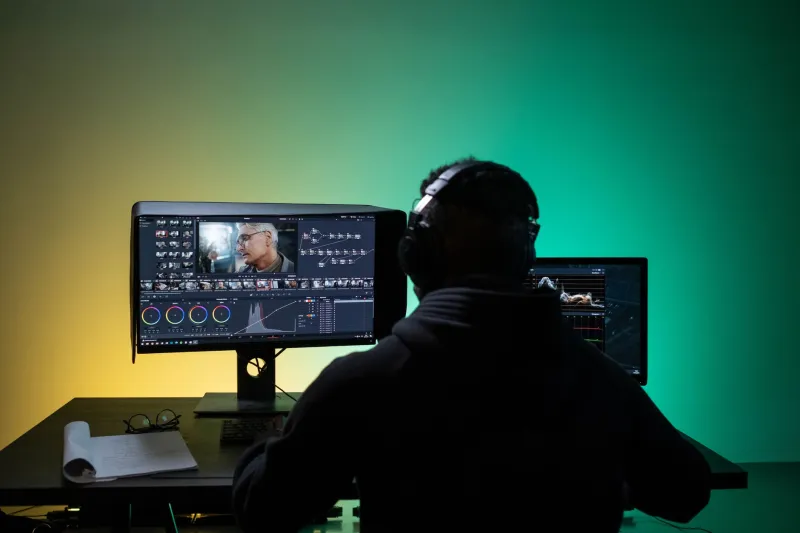
It would be a mistake to locate strategic pacing solely in the director's vision. The editor is equally implicated — and the decision to preserve rather than trim a held moment is one of the more courageous choices available in the cutting room.
The conventional editorial instinct is to tighten. Footage that does not advance plot or deliver new information is, by traditional metrics, expendable. But this calculus misunderstands what certain kinds of footage are doing. A two-second extension on an actor's face after a difficult line reading is not narrative fat. It is emotional punctuation. Cutting it removes not dead weight but meaning.
Editors working with directors who prioritize pacing — figures like Chloé Zhao, whose Nomadland won the Academy Award for Best Picture in 2021 — develop a different vocabulary for evaluating footage. The question is not only does this advance the story but does this allow the story to be felt. The latter is harder to answer, more subjective, and ultimately more important.
Stillness in Studio Context
It would be easy to frame this conversation as purely the province of independent film — the slow cinema tradition, the festival circuit, the art house. But the most interesting development of the past decade is how these sensibilities have migrated into studio productions with considerable commercial ambition.
Chloé Zhao's work at Marvel, specifically Eternals, drew significant critical debate, but much of that debate centered on the film's insistence on pausing — on letting characters exist in quiet landscapes, on withholding the kinetic momentum audiences associate with the genre. Whether or not one considers the film a success, its existence within a major franchise signals something meaningful: that the appetite for paced, deliberate storytelling has enough cultural currency to influence productions at the highest budget levels.
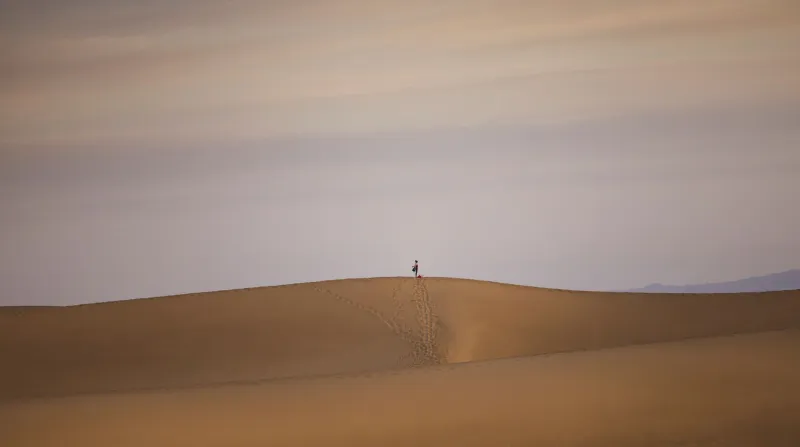
Similarly, Denis Villeneuve's Dune — a Warner Bros. production with a budget exceeding $165 million — built much of its power from restraint. Scenes of vast, silent desert. Dialogue sequences that refused to rush. A sonic design that frequently withdrew rather than amplified. The film grossed over $400 million worldwide and was praised precisely for the quality that slower-moving pictures are often penalized for in commercial assessments.
Teaching the Pause
For filmmakers developing their craft, the practical challenge is learning to distinguish between stillness that serves the work and stillness that merely tests patience. The difference is intention and preparation.
Strategic pausing does not emerge from hesitation or from a failure to generate sufficient coverage. It emerges from a clear understanding of what a scene needs emotionally and a willingness to trust that audiences will meet the film in that space. This trust must be earned through the quality of everything that precedes the pause — the performances, the cinematography, the sound design, the editing rhythm that has been established across the preceding reels.
A pause that arrives without that foundation reads as emptiness. A pause that arrives within a carefully constructed emotional architecture reads as depth.
The distinction is everything. And learning to engineer the latter — to build the conditions under which silence becomes eloquent — is among the most demanding and rewarding skills available to the contemporary visual storyteller.
In a medium that has always competed for attention, the counterintuitive act of asking an audience to simply wait may be the most sophisticated demand a filmmaker can make. And when it works, nothing hits harder than the moment when absolutely nothing happens.